Addtime:2026-06-18 Hits:80
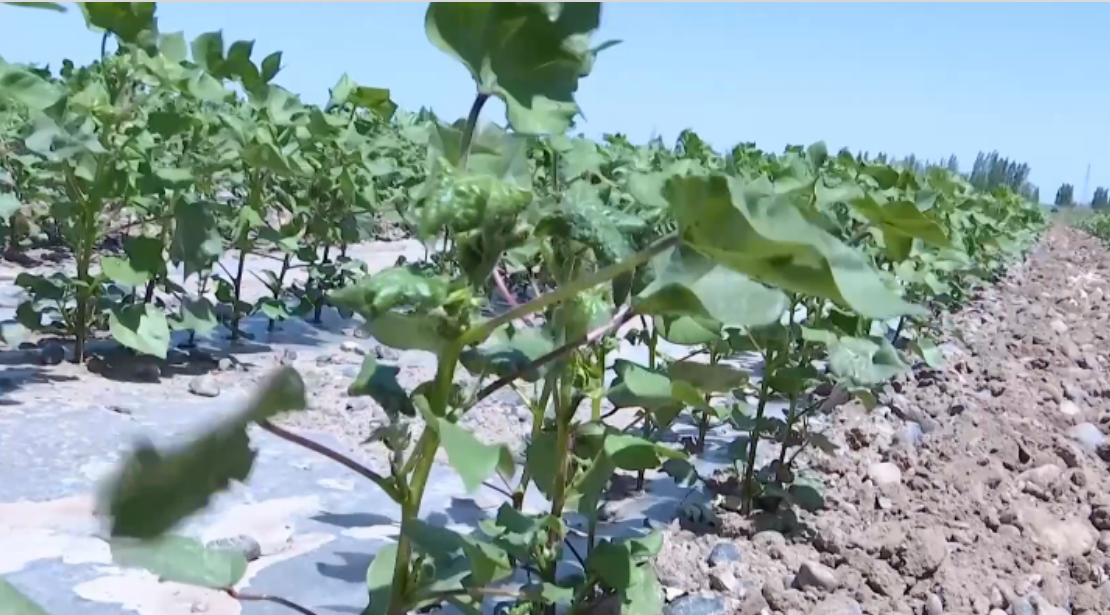
Currently, the 2.9 million mu of cotton in Changji Prefecture, Xinjiang, has fully emerged in visible rows, marking the start of a critical window for field management. To seize the opportune time for farming and lay a solid foundation for a bumper harvest, the local government organized a large number of agricultural technicians to go down to the fields and provide face-to-face guidance to cotton farmers and farmers' professional cooperatives on cotton cultivation. Through refined management measures such as improving soil permeability, increasing soil temperature, and regulating field moisture, the government is making every effort to ensure that cotton plants steadily bud and bloom, thereby promoting the improvement of cotton growth and quality.
In recent days, the 34,000 mu of high-quality, machine-harvestable cotton fields in Erliugong Town, Changji City, have turned lush green. Having entered the management phase following row emergence, inter-row cultivation operations are proceeding in an orderly and accelerated manner. Large-scale cultivation machines are moving back and forth across the fields with high efficiency, performing standardized deep inter-row cultivation and scientifically optimizing the growth environment for the cotton seedlings. Operator Wang Cunjun explained that the machinery deployed features a working width of 5.6 meters—perfectly matching the local standard row spacing of 2.28 meters—and maintains a stable cultivation depth of 15 to 20 centimeters, ensuring high precision and compatibility. "The equipment is highly efficient; a single machine can cultivate 250 mu per day with uniform depth and reliable quality, creating excellent conditions for seedling growth," Wang said.
This year, the total cotton planting area in Changji Prefecture exceeds 2.9 million mu, concentrated primarily in key cotton-growing areas such as Manas County, Hutubi County, and Changji City. Currently, the seedlings are thriving and are on the verge of entering the critical budding stage. The budding stage is a pivotal turning point in the plant's development, characterized by both vegetative and reproductive growth; it directly determines the number of bolls produced and is crucial for overall yield formation, making precision field management essential. To capitalize on the critical window for field management during the squaring stage and accelerate cotton development, Changji Prefecture has implemented a multi-pronged approach to ensure effective field care. Agricultural technicians have been deployed to all cotton-growing zones to demonstrate and promote advanced, practical technologies—such as smart irrigation and integrated water-and-fertilizer systems—specifically for the squaring stage. They guide growers in precisely adjusting water and fertilizer ratios based on real-time crop and soil moisture conditions and in proactively implementing eco-friendly pest and disease control measures, thereby comprehensively safeguarding the growth of cotton seedlings.
Under the continuous guidance of agricultural technicians, the 5,800 mu of cotton managed by the Cunlin Agricultural and Animal Husbandry Professional Cooperative in Changji City is thriving. The seedlings feature robust stems and have developed five to nine leaves each; overall growth surpasses that of the same period in previous years, and the crop is poised to enter the squaring stage. Chen Jun, Director of the Agricultural Development Service Center in Erliugong Town, Changji City, noted that the seedlings are currently at the "five-leaf, one-heart" stage—a golden period for rapid growth—making scientific inter-row cultivation the top priority for field management. "Carrying out inter-row cultivation now not only effectively eliminates weeds and reduces nutrient loss but also raises soil temperature and lowers field humidity, creating an optimal environment for root development. We strictly adhere to a cultivation depth of approximately 15 centimeters to rapidly increase soil temperature. Once cultivation is complete, we will immediately begin the first round of irrigation to seize the growing season and foster rapid, vigorous seedling growth."
Thanks to scientific and precise field management, growers are confident in a bumper harvest this year. Ma Cunlin, Chairman of the Cunlin Agricultural and Animal Husbandry Professional Cooperative, stated that the cooperative would strictly follow technical guidelines to complete inter-row cultivation to a high standard. They plan to precisely implement subsequent management measures—such as irrigation and fertilizer adjustment—and maintain meticulous care throughout the growing season, striving for high-quality, high-yield cotton production and stable income growth.
It is reported that due to earlier low-temperature weather, the development of this year's cotton crop in Changji Prefecture is lagging five to seven days behind the usual schedule. Addressing the specific characteristics of the crop's development, local authorities implemented targeted measures. By applying advanced techniques—such as nurturing weaker seedlings to boost their growth, precisely managing water and nutrients, employing scientific growth regulation, and utilizing smart irrigation—they effectively compensated for developmental lags. These efforts accelerated the seedlings' growth, aiming to achieve the production goal of "late emergence without late maturity."
In 2026, Changji Prefecture continued to optimize its cotton production system, selecting six key cotton varieties and prioritizing the promotion of three advanced cultivation technologies. Thanks to favorable weather conditions, a robust three-tier agricultural technical service network (spanning prefecture, county, and township levels), and the widespread adoption of digital cotton field management and smart irrigation, the region’s cotton production foundation is solid and crop growth is steady, laying a firm groundwork for a bumper harvest.